Sunday, May 12, 2013

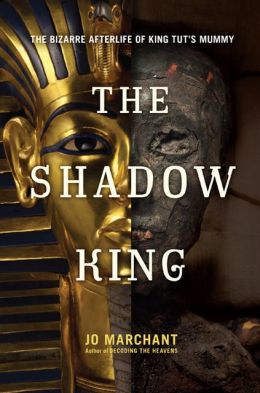
Book Review: "The Shadow King: The Bizarre Afterlife of King Tut's Mummy" by Jo Marchant


Nonfiction, you ask? Isn't this supposed to be a SpecFic blog?

You're right, my literary tastes normally tend toward the fantastical. But I've made an exception for Marchant's latest book for several reasons: First of all is the subject matter. Ever since the tombs of ancient Egyptians started being excavated over a century ago, the mysteries that were hidden therein have prompted both professional and amateur Egyptologists everywhere to wonder about the people who built and inhabited those ruins. Speculation in its purest form! Secondly, the book sets a spotlight on the hypotheses of the researchers, archaeologists, and other specialists who studied King Tut and his fellow royal mummies. But Marchant goes even further, to reveal which speculations were proven true, how theories morphed and evolved with scientific capabilities, and what we still don't know today where the famous Egyptian mummies are concerned. King Tut and the rest of the royal mummies uncovered in and around the Valley of the Kings are a SpecFic enthusiast's dreams come to life: mighty ancient civilizations full of power and intrigue, a pantheon of fascinating gods, unbelievable treasures, and the remnants of royal leaders so well-preserved that they have lasted three thousand years for us to wonder at today. The best part? This dream is true, and depicted in extreme detail in Marchant's book.

Marchant, already a renowned journalist specializing in history and science, starts this book with the initial discovery of the valuables hidden with Egypt's mummified dead, and the treasure hunt that ensued. From that beginning, she traces the development of discovering not just the tombs themselves but the mummies therein, and the questions that their presence prompted: Who were they? How had they been preserved? What secrets could they reveal to us about their once-mighty civilization? From initial tomb openings and autopsies in the 1920s to modern-day DNA testing, museum displays and cable tv specials, Marchant follows not just King Tut but the other royal mummies as well, and the people who studied them.

And like any good investigative reporter, she doesn't pull any punches. Marchant reveals the unscientific, often brutal ways in which mummies - even King Tut - were treated by early Egyptologists (in fact, she points out how some of the ways in which mummies were treated led to later misdiagnoses by more modern Egyptologists, due to the conditions in which the bodies were left). She faithfully follows these tests, hypotheses, and discoveries straight into the modern age, where conflicts over the viability of ancient DNA create controversy in trying to reconstruct King Tut's family tree. Additionally, Marchant is sure to include details of public reactions to the mummies and the study of them: political implications, "Tut-mania" in the mainstream market, museum exhibits and even a fringe group that believed King Tut was really either Moses or the Pharaoh featured in Exodus.

Don't mistake this book's classification as "nonfiction" for "dry" or "boring." Marchant's voice is very personable, and infinitely readable. It feels like she's talking to you through the pages, explaining complex science in layman's terms without making the reader feel dumb. As easygoing as her voice is though, her sources are all meticulously cited both in footnotes and in a bibliography at the end of the book. By the time I finished The Shadow King, I wondered if maybe Marchant didn't know more about King Tut than some of the specialists who worked on him. Photographs, some from the original excavations and autopsies, provide extra depth on the subject of the royal mummies and are a real treat as well as giving some additional perspective on Egyptology.

I highly recommend this book to anyone with an interest in ancient Egypt, modern-day science, modern archaeology and anthropology, DNA technology, or just the fact that an empire like that of King Tut even existed. It's truly a treat to read, even if nonfiction isn't really "your thing." Trust me. Whoever you are, there's something interesting for you in this book, even if it's just a new story idea of your own.

Jo Marchant's first book, Decoding the Heavens (in case you're interested in the Antikythera mechanism), is in stores now. The Shadow King will be available at your local independent bookstore starting on June 4th.

Saturday, April 13, 2013

World Book Night 2013

On Tuesday the 23rd of this month, you may be surprised to have a friendly bibliophile offer you a free copy of one of their favorite books. No strings, gimmicks, or email sign-ups; just a free book. Take it, read it, and enjoy. Then pass it along. This, my friends, is the magic of World Book Night.

In more than 6,000 towns and cities across the US, and internationally as well, World Book Night is a great way to strengthen community, support literacy, and share amazing books. The focus of the program is to get engaging books out to people who normally don't read, and people choose their giving points accordingly. Some ideas that have been thrown around my neck of the woods are public bus stops, parks, cafes, and women's shelters, but schools, churches, farmers' markets and public parks are equally fair game. The message remains: read!

The 2013 World Book Night books include The Handmaid's Tale (Margaret Atwood), Fahrenheit 451 (Ray Bradbury, whose books were also featured as February in this year's Literary Pin-up Calendar), The Alchemist (Paulo Coelho, whose book is being given in both English and Spanish-language editions), Bossypants (Tina Fey), and Good Omens (Terry Pratchett and Neil Gaiman), among many others from various genres. I will be handing out copies of one of my favorites, Looking for Alaska by John Green. You can look here for a full list of the 2013 WBN books.

If you'd like to learn more about World Book Night, look up WBN events in your area, or even consider signing up to be a giver next year, you can visit the official website here. And should you be out and about on the 23rd, and be offered a book by a WBN giver, feel free to stop and talk to them. What do they love about this book? Why should you read it? What made them want to share this book? We're more than happy to chat!

Happy reading, everyone!

Thursday, April 4, 2013

Book Review: "Icons" by Margaret Stohl


Kicking off her solo writing career after her success with Beautiful Creatures and its associated books, Margaret Stohl brings us Icons, the first in a new series.

Doloria de la Cruz has been raised in a small mission in the wilds of California. There is no electricity, no power of any kind. Not since The Day, when extraterrestrial invaders sent projectiles into the 13 largest cities on Earth, which produced electrical pulses that killed everyone around them instantly. Doloria survived, and she's about to find out why. On her 17th birthday, her mission home is attacked by Sympa troops and she is taken to the Embassy for reasons unknown to her. However it soon becomes clear that she, and three other teenagers, have something very special about them. Surrounded by Sympa soldiers, a sadistic "teacher," and with the constant threat of alien ships above them, Doloria and her companions uncover truths about themselves and their alien masters with the help of the Grass Rebellion leader, a kooky computer, and their own mysterious powers.

Stohl presents here an interesting take on the idea of alien invasion: faceless extraterrestrial overlords who allow human leaders to remain in power and govern their own cities within certain guidelines. By doing this, she primes her new books for intense political energy and surprise twists in alliances in the volumes to come. Additionally, the idea of using electricity to control humans is well thought out. Aliens allow and control power within the cities where humans can be monitored and put to work, but outside, any presence of electricity can be identified and its creators captured. Additionally, electricity can be used to control the human body itself, surging to cause heart attacks like what happened on The Day and forming a barrier to keep humans away from the objects that were dropped on the cities then.

While these ideas have a lot of potential, I feel that they failed to balance out what was lacking in other parts of Stohl's novel. The general idea is that the "Icon Children"'s extreme emotions are what allow their powers to manifest, but the reasons why emotion is powerful against the alien force is mentioned only once that I can remember in the entire text, and that in passing. Additionally, for having characters who channel such intense emotion, the book doesn't convey much in the way of feelings. It's a classic case of "telling" instead of "showing" the reader what's being felt, leaving me with the idea that Doloria experiences a certain emotion rather than making me feel that emotion myself.

Additionally, I feel like the middle part of the book was extremely static and just a little confusing. The companions are in the Embassy, but we don't really know what they're doing there. The interim offers the opportunity for them to find out valuable hidden information, and allows them to build up some relationships together, but it's not really clear if they're students, prisoners, soldiers, or what. Allusions are made to classes, but they seem to move about on their own schedule, but are accompanied by guards and occasionally undergo experiments. This period of stalled activity then explodes into the novel's conclusion, which seemed to me like it happened much too fast. Lots of intense, dangerous, amazing moments are taking place in the space of just a few paragraphs, when I feel like there should have been pages devoted to the characters' reactions, thoughts and feelings. A big opportunity was missed there by compressing an event that could have really drawn readers in instead of being glossed over and moving on to the end.

Icons is a good story concept, but the execution fell far short of what it had the potential to be. If you're willing to overlook sub-par storytelling in the event of an innovative story, then by all means, I recommend this latest from Margaret Stohl. It is my hope that the next book in the series will be able to shore up some of the weaknesses in this first installment. Look for Icons at your favorite local bookstore beginning in May of this year.

Monday, April 1, 2013

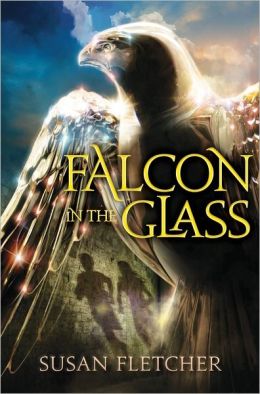
Book Review: "Falcon in the Glass" by Susan Fletcher


Fletcher adds to her repertoire of YA novels with this tale of a young would-be glass blower in Venice. The year is 1497, and Lorenzo is determined to overcome the dishonor of his assassinated father to become a glassblower in his own right. But nobody is willing help him learn. One night, in exchange for shelter, he buys the assistance of one of the Bird Children, social outcasts who have a strange connection with the birds that accompany them. This arrangement launches Lorenzo into a series of triumphs, revelations, and seemingly impossible situations to try and both save his family and the Bird Children who have come to rely on him.

The research that Fletcher did to accurately portray the life of a glassblower, down to the forbidden nature of leaving the small community, was really astounding and allowed her to create a very convincing depiction of the era. The settings are vivid and believable, as are the characters. Lorenzo is caught between wanting to follow his dream, needing to provide for his family, and protecting those who have come to rely on him, and his seeming helplessness in the face of the Council of Ten that governs Venice is well communicated.

While I very much liked Lorenzo's character (his growth over the course of the book is unmistakable, but not too sudden or without stimulus) I had a lot of questions about the Bird Children. Their special connection with their birds was never explained, although their back story was fleshed out a bit by the grandmother character. There was great potential for Letta to illuminate the nature of the Bird Children, but I felt let down by the fact that the only explanation from her was "we don't understand it either." I felt like a chance at some imaginative storytelling was overlooked here, and that detracted from the Bird Children as a group as well as individuals in context of the story.

Overall though, this book was a great read. It had compelling, believable conflicts, an interesting setting temporally as well as geographically, the characters were well written, and the arc was well balanced. I'd recommend this for either young teens or (even better) as a bedtime read-aloud. Trust me, you're never too old to share a book with someone you love.

Look for Falcon in the Glass, by Susan Fletcher, at your favorite independently-owned bookstore starting on July 9th. 

Sunday, March 24, 2013

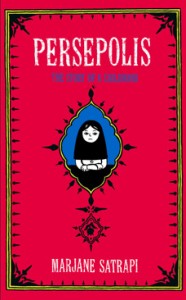
"Persepolis": My Two Cents on the Chicago Issue


Hopefully by now, you've heard at least in passing that on March 15th, the Chicago School District banned the graphic memoir Persepolis, by Marjane Satrapi, from its classrooms and libraries. Persepolis is Satrapi's memoir of growing up during a dangerous period of political unrest, Westernization, and discrimination during the Islamic Revolution in Iran. Satrapi tells her story of clashing cultures in graphic novel form, and yes, her story includes things like torture, a man urinating on another man, and images of exposed body parts. Because of these images the Chicago School District came to the conclusion that its students were not capable of handling the book, and banned Persepolis from its district (although since then it's backpedaled to only restrict its inclusion in the 7th grade curriculum. 8th and 10th grade curriculums are still up in the air).

The Chicago Teachers' Union, National Coalition Against Censorship, the Comic Book Legal Defense Fund, American Booksellers Foundation for Free Expression, Association of American Publishers, the PEN America Centre and the National Council of Teachers of English, among others, have spoken out against the ban of such a powerful work of literature. Many opposed to the ban argue that really, this is the perfect age at which students should be introduced to stories like Satrapi's, since they are the approximate same age as the protagonist, and may be facing some of the same struggles at a time when they are caught between childhood and adulthood and can often feel helpless, directionless.

Yes, I think that Persepolis belongs in the hands of readers young and old alike. But I also think that whether or not the book should be taught is too shallow a question to ask when there is a much bigger issue lurking just below the surface. I'm talking about facing some of life's most difficult situations and working your way through to a plan of action.

Teenagers, even young ones and "tweens," are smarter than you think. Immature, yes, but smart. They know what goes on in the world, about war and violence and discrimination and rape, no matter how much you think you've sheltered them, no matter how much you'd love to think they will never have to face any of these difficult things. It's there on the evening news, in video games and song lyrics, in popular tv shows. These kids know about these horrible things even if their parents or teachers never say a word about it. They know these things exist, but do they know how to handle them?

Books like Persepolis provide the perfect opportunity for open discussion about these harsh realities, and healthy ways in which to address them. Teachers can be trained to use stories like Satrapi's as valuable guides for critical thinking and situational analysis from a third-person perspective, guiding the students through the protagonist's struggles with an eye toward constructive problem-solving. Analysis of this could take place through open class discussions and exploratory writing exercises to identify positive and negative actions taken by the protagonist, the impacts of those actions, and how and how a student can or can't relate to what the protagonist is thinking and feeling.

By overcoming the cultural gag order on controversial issues in our public school systems, we can guide students in the direction of healthy decision-making to prepare them for when they face their own seemingly impossible situations. And this opportunity is not limited to using Persepolis. Sherman Alexie's The Absolutely True Story of a Part-Time Indian features a teenage boy who learns to view women as valuable individuals, instead of just sex symbols and objects of desire. It also includes a reference to masturbation. Speak, by Laurie Halse Anderson, depicts the struggle of a teenage rape victim as she tries to accept what happened to her and tell someone about it. It involves teen drinking, delinquency, and rape. But these are the realities of teens in the modern age, which is why they appear in so many YA authors' work.

Public schools, however, need to consider whether a book is going to offend their community. This is a major stumbling block for the "teaching the situation" approach that I've outlined here. Some parents may insist that their child is still in need of being sheltered from the world, and for those people I really have no polite or diplomatic response at the moment. For the rest, who are concerned about how the book in question is to be taught or whether a single reaction to that book is going to be forced upon a child, I suggest that this is an incredible opportunity to be involved in a child's education. Especially knowing that a student is going to be reading and talking about some emotionally tough subjects, a parent can really seize the moment to talk with their child and ensure that they are getting familial values and ethics out of the book. Communication with teachers, too, can reassure parents that the book is indeed being taught as a constructive tool for handling future life challenges. An open dialogue between parents and educators with the child's education at the center of everything? What could be better?

Additionally, a parent volunteering to openly talk with their child about rape, violence, discrimination, and other tough issues in books shows a child that they're interested in what the child thinks on those issues. By talking about drugs in, for example, Go Ask Alice, a parent signals to a child that they are a "safe" person to whom they can address questions or concerns not just about the book, but in real life as well. The topic of drugs, or where they can lead, is no longer a forbidden topic because that topic has been broached by the book.

This is my idealistic, ever-hopeful, rose-tinted vision of what our education system could be like someday. We're nowhere near to reaching it, but that doesn't mean someday it won't be possible. For the time being though we're still stuck in a rut pitting teachers against school districts over an image of male genitalia or the word "bitch." And students keep watching their shows, playing their video games, without knowing that it's okay to talk about the harsh realities pictured there. This isn't just about Persepolis: It's about how we approach our children, what we trust them to be able to handle responsibly, and who's going to step up and teach them how to make it through the tough parts of life. Right now in Chicago, it looks like the ones who are really suffering because of this book ban are the students. And I sincerely hope that this changes soon. 

Monday, March 18, 2013

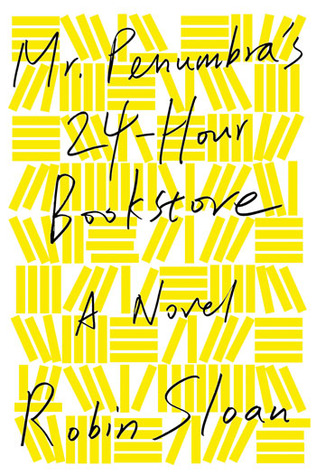
Book Review: "Mr. Penumbra's 24-Hour Bookstore" by Robin Sloan


Archaic codes and cutting-edge technology collide in this present-day tale of espionage and adventure. After Clay Jannon takes a job at San Francisco's strangest bookstore, he becomes curious about the unusual customers who check out the large tomes from the back shelves at odd hours of the night. His curiosity leads him into secret cults, the technological omnipotence of Google, and possibly to true love and to the secret to eternal life?

I was really impressed by the initial subject of this book: the intersection of traditional book reading and the new advances in reading technology. As someone who works at this crossroads nearly every day (as part of the Village Books eTeam) this subject is of personal interest to me, and to many others with one foot in literature and the other in the computer age. Sloan does a great job of depicting the huge leap between traditional book reading and the new technology of e-readers. The speed with which these developments are being made is truly incredible, and most of us can't even imagine the true technological might of a company like Google or other companies behind many new reading methods.

While the story in "Mr. Penumbra's 24-Hour Bookstore" is full of old codes, new kinds of books, methods of reading and a simultaneous love for antiquity, it gets strange really quickly. While I loved the RPG references and cherished fantasy novel memories on the part of the protagonist, it got hokey with the advent of an actual secret society as part of the story. That plus the unsatisfactory culmination of the society's centuries-old mission combined to form a real letdown at the end of the story.

However, the research that went into the font, and the idea to use it as a basis for a business/secret society was truly inspired. It brought to mind another recent book, this one nonfiction, about the history of fonts and their creation. A little bit about "Just My Type" by Simon Garfield can be found here if you're interested.

I'd recommend "Mr. Penumbra's 24-Hour Bookstore" to people who are interested in the cutting edge of reading technology but who still have a fondness for good old paper books, especially if you don't mind a little bit of cheese in exchange for some really cool technology. If you share Jannon's memories of high school fantasy obsessions, that helps too. This novel is available now at your favorite local bookstore! Also, did I mention that the yellow books on the cover glow in the dark? Awesome.

Sunday, February 24, 2013

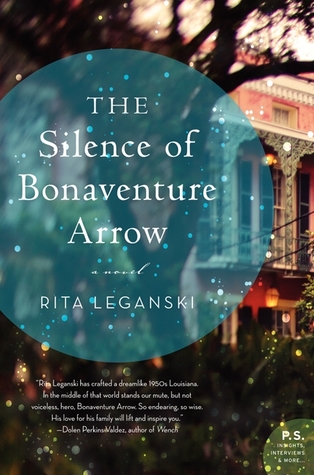
Book Review: "The Silence of Bonaventure Arrow" by Rita Leganski


This is a beautiful story about a little boy endowed with a special ability that will save his family from their own painful secrets. Born without a voice, Bonaventure Arrow can hear everything, from the bayou grasses near his home in Bayou Cymbaline, to trees blowing in Arkansas, to penguins on the ice in Antarctica. But beyond that, Bonaventure can hear colors, feelings, faith; his mother's sorrow and guilt, his grandmother's shameful secrets, and his dead father speaking to him.  It is this special gift of hearing, combined with the help and guidance of a housekeeper who is more than she appears, that will allow Bonaventure to alleviate the pain of both the living and the dead.

The writing in this novel is superb, with creative descriptions of the sounds that might be made by things we cannot hear. For instance, the color red is described as sounding like trombones. The inventiveness in Bonaventure's communication, from extremely expressive facial expression when he is very small to learning sign and writing, is really something incredible. Additionally, the language in the story itself is beautiful as well as simple, creating the feeling of open affection for Bayou Cymbaline and its unique brand of southern culture. The words themselves, how they have been crafted together, is indicative of the characters' attitudes.

Religion, from voodoo and hoodoo to Catholicism and various revival churches, plays a large role in this story but skirts around the common problem of being preachy. Centered as it is in a place with such rich and varied cultural history, this novel takes full advantage of its location and Leganski does an incredible job of blending multiple religions and spiritual practices into (mostly) harmonious coexistence, focusing on their commonalities instead of their differences.

This book made me feel like a witness to something strange and beautiful happening to people outside of myself. I recommend this book to anyone who loves a creative story of monumental kindness and beauty and sweet selflessness that puts things back as they should be. Look for The Silence of Bonaventure Arrow, by Rita Leganski, in your favorite local bookstore starting in March of this year.