Monday, June 17, 2013

Book Review: "The Scrivener's Tale" by Fiona McIntosh


I'll be the first to admit that "fantasy" is an awfully broad category. But McIntosh's latest novel The Scrivener's Tale truly does fit squarely into the realm of "classic fantasy." Don't immediately start thinking of The Sword of Shannara or the Dragonlance Chronicles, though; this isn't your typical magic-wielding situation. Instead, picture this: Gabriel, a former psychiatrist living in modern-day Paris, agrees to see one last patient as a special favor to a friend. But the patient who appears to be a lost, delusional girl turns out to be a demonic minion who uses the unsuspecting Gabriel to somehow transport both of them to another world. Now Gabriel must hide his consciousness inside his own body while the minion and her demon use it to wreak havoc on the kingdom of Pearlis.

Meanwhile the Brotherhood, an order sworn to protect the royal family of Pearlis, has become aware of the demonic threat. One of their own, Cassien, has been trained from birth to deal with such an eventuality. Now with the help of a young boy and a legendary magic wielder, it's up to Cassien to defend his princess and save Pearlis from the demon's ancient evil.

So, now you see what I mean when I say "classic fantasy." You have a princess in trouble, a handsome and peerless warrior, an unspeakable evil, world-traveling, and magic. But despite the theme, which may seem unoriginal at first glance, this was a genuinely well-written story. It did start out pretty rough, though, writing-wise. It felt like McIntosh was just so excited to get started telling the story that she had some trouble clearly articulating the setup. I had a really difficult time getting my bearings with the initial perspective of the story, and I understand McIntosh's desire as a writer to set up the background of the story from the beginning (especially since there's such a rich back story in this case) but I think this would have been better presented through the process by which the characters learn about their own past. All the prologue did for me was confuse and disorient.

But if I overlook the initial clunky start, the rest of the book was well-done and entertaining. In particular, Gabriel's character and his reaction to world travel and demonic possession were extremely believable. He was a very sympathetic character, and McIntosh did a great job writing the confusion, disbelief, outrage and disorientation that I imagine a situation like this would instill in an ordinary person just trying to go about his life.

One other glaring issue I had with the book didn't have to do with the story itself though; it was the title. Although there is a scrivener's quill involved in the book, and the question of what exactly a scrivener is gets addressed very clearly, there is no scrivener in the story. At the very tail end of the book one character expresses an interest in maybe exploring the possibility of a life as a scrivener, but I didn't feel that this tentative association justified entitling the whole book The Scrivener's Tale.

If you love classic fantasy but want a break from elves and dwarves, or if the theme of travel between worlds piques your interest, I recommend that you pick up a copy of The Scrivener's Tale by Fiona McIntosh. It was released in April and is available now at your local independent bookstore.

Thursday, June 6, 2013

Book Review: "Doomed" by Chuck Palahniuk


You've probably heard the name Chuck Palahniuk before, either because you've seen the movie "Fight Club" (Palahniuk penned the original novel) or because you've read one of his twelve - yup, you read that right - other amazing and highly acclaimed novels. Doomed will be his next masterpiece, the second installment of his take on Dante Alghieri's Divine Comedy.

Madison Desert Flower Rosa Parks Coyote Trickster Spencer, the only child of two pop-culture idols, died and made her way through the (really gross) depths of Hell in Damned, the prequel to Doomed. Now, through a freak spiritual accident on Halloween, Madison finds herself trapped in spirit form back on Earth. Through her own meddling, Madison finds to her horror that she's inspired her parents to found a new religion centered on their dead daughter, effectively damning everyone on earth to eternity in Hell. We follow Madison, through her blog posts from beyond the grave, as she explains the events that led up to her death, the subsequent founding of Boorism, and her attempts to herd the Human Race away from damnation.

The sardonic voice of Madison is a perfect vehicle for telling this story of childhood gone horribly (and hilariously) awry. From her parents' private mansions in Milan or Monte Carlo or Mogadishu to her time with her grandparents in "tedious upstate," Palahniuk bounces the reader around while somehow still miraculously managing to keep the story line together and see that it progresses at a reasonable rate. There also appears to be a "voice within a voice" present, as Palahniuk adopts the voice of a character adopting her own voice for her blog. It really is quite the impressive feat, and really shines when Madison dictates conversations that she had. They differ noticeably from her writing voice, in a subtle but distinct manner.

Another writing feature that Palahniuk consistently uses is one that I've taken the liberty of appropriating in the previous paragraph: Referring to a given home by simply giving three possible cities that begin with the same letter really brought home the nature of Madison's parents' rockstar lifestyle. This device (like "Paris or St. Petersburg or Palikir") really emphasizes the fact that they moved around so much to their various properties, place came to really not matter at all. In the midst of all this glamorous jetting around the world, Madison really had no home other than the presence of her parents, which is I think important to notice, especially when it comes to the time that she spent in "tedious upstate."

On something of a tangent, I also want to comment on how good Chuck Palahniuk is to his loyal fans. It was my privilege to work briefly with him when he did an event at the Wild Buffalo in Bellingham, and despite the long line for autographs and a time crunch to clean up after the event, he stayed until everyone had had their books signed. Additionally, he took photos and even stepped outside to say hello to a fan who couldn't get into the 21+ venue. He even signed my copy of Haunted for me:


If you're a fan of beautifully irreverent humor in the form of supernatural adventure, snarky protagonists or horribly unfortunate events that make you groan and giggle at the same time, or if you've read and liked Chuck Palahniuk's off-the-wall sense of irony, plan on buying your copy of Doomed when it's released on October 8th of this year. That gives you plenty of time to read Damned, the first book in this series, which is available at your favorite local bookstore now.

Sunday, June 2, 2013

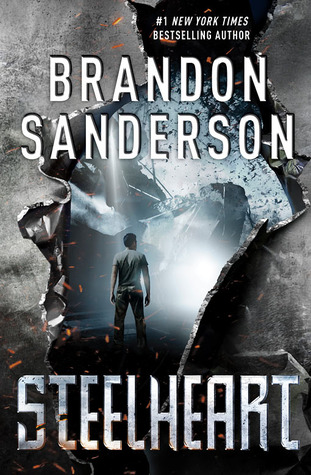
Book Review: "Steelheart" by Brandon Sanderson


When a select few humans are suddenly and inexplicably gifted with superpowers, what if they don't become the benevolent protectors we always see in comic books? What if, instead, they became tyrants? Sanderson's latest book addresses just such an eventuality in this superbly written near-future tale of rebellion and revenge. David lives in Newcago, which was Chicago before the arrival of Steelheart, the city's new sovereign "Epic." The day he took over the city, Steelheart also killed David's father and buried all evidence of the incident under tons of steel. But what he doesn't know is that there was one survivor - David - who saw what happened that day and knows it could be the secret to Steelheart's one weakness.

But how is a 19-year-old boy obsessed with collecting information on Epics supposed to take on a man who can fly, control the elements, turn inanimate objects into solid steel, and who is apparently invulnerable? If he has any chance at all to take revenge for his father's death David will need to enlist the help of the Reckoners, a group of ordinary humans out to hold the Epics responsible for their crimes. If David can find a way to join them, he'll still need to convince the Reckoners to take on Steelheart.

While his quest for revenge isn't the most uncommon theme, David's character is both genuine and endearing. I found his problem with metaphors particularly endearing (my favorite one was "like a brick made of porridge") and his interactions with the wildly varied cast of personalities that make up the Reckoners. But this is by no means a purely character-driven novel, although watching David figure out where he fits into the group was a very rewarding read in itself.

The story's rising action is such a thing of beauty, it makes me actually want to cry. I was constantly wondering what would happen next, and that's no easy feat, since over the years as both a reader and writer I've gotten pretty good at predicting plot twists. But Steelheart kept me intrigued from cover to cover, with Sanderson dishing out just the right amounts of new revelations at just the right times to create a compelling story arc that leads seamlessly into an explosive climax. And the falling action afterward is nothing short of flawlessly executed, with the select few strings left hanging designed (successfully, I might add) to keep me biting my fingernails until the next installment is released in 2014. It's a perfect launching point for the next book in the series, particularly when it comes to Doc's and Megan's identities. I would, however, have liked to know more about why using their powers makes Epics react the way they do, and more details about how and when Megan joined the Reckoners.

If you're a superhero enthusiast, of you're into steampunk, cyberpunk, urban fantasy or any kind of Sci Fi, this is your book. Between the brilliant plot twists and the remarkable variety of characters that make up the story, I'm floored in the best of ways. Reserve your copy of Steelheart at your favorite independently owned bookstore and try to contain your excitement until it's released on September 24th of this year.

Sunday, May 12, 2013

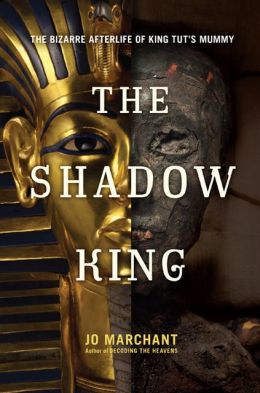
Book Review: "The Shadow King: The Bizarre Afterlife of King Tut's Mummy" by Jo Marchant


Nonfiction, you ask? Isn't this supposed to be a SpecFic blog?

You're right, my literary tastes normally tend toward the fantastical. But I've made an exception for Marchant's latest book for several reasons: First of all is the subject matter. Ever since the tombs of ancient Egyptians started being excavated over a century ago, the mysteries that were hidden therein have prompted both professional and amateur Egyptologists everywhere to wonder about the people who built and inhabited those ruins. Speculation in its purest form! Secondly, the book sets a spotlight on the hypotheses of the researchers, archaeologists, and other specialists who studied King Tut and his fellow royal mummies. But Marchant goes even further, to reveal which speculations were proven true, how theories morphed and evolved with scientific capabilities, and what we still don't know today where the famous Egyptian mummies are concerned. King Tut and the rest of the royal mummies uncovered in and around the Valley of the Kings are a SpecFic enthusiast's dreams come to life: mighty ancient civilizations full of power and intrigue, a pantheon of fascinating gods, unbelievable treasures, and the remnants of royal leaders so well-preserved that they have lasted three thousand years for us to wonder at today. The best part? This dream is true, and depicted in extreme detail in Marchant's book.

Marchant, already a renowned journalist specializing in history and science, starts this book with the initial discovery of the valuables hidden with Egypt's mummified dead, and the treasure hunt that ensued. From that beginning, she traces the development of discovering not just the tombs themselves but the mummies therein, and the questions that their presence prompted: Who were they? How had they been preserved? What secrets could they reveal to us about their once-mighty civilization? From initial tomb openings and autopsies in the 1920s to modern-day DNA testing, museum displays and cable tv specials, Marchant follows not just King Tut but the other royal mummies as well, and the people who studied them.

And like any good investigative reporter, she doesn't pull any punches. Marchant reveals the unscientific, often brutal ways in which mummies - even King Tut - were treated by early Egyptologists (in fact, she points out how some of the ways in which mummies were treated led to later misdiagnoses by more modern Egyptologists, due to the conditions in which the bodies were left). She faithfully follows these tests, hypotheses, and discoveries straight into the modern age, where conflicts over the viability of ancient DNA create controversy in trying to reconstruct King Tut's family tree. Additionally, Marchant is sure to include details of public reactions to the mummies and the study of them: political implications, "Tut-mania" in the mainstream market, museum exhibits and even a fringe group that believed King Tut was really either Moses or the Pharaoh featured in Exodus.

Don't mistake this book's classification as "nonfiction" for "dry" or "boring." Marchant's voice is very personable, and infinitely readable. It feels like she's talking to you through the pages, explaining complex science in layman's terms without making the reader feel dumb. As easygoing as her voice is though, her sources are all meticulously cited both in footnotes and in a bibliography at the end of the book. By the time I finished The Shadow King, I wondered if maybe Marchant didn't know more about King Tut than some of the specialists who worked on him. Photographs, some from the original excavations and autopsies, provide extra depth on the subject of the royal mummies and are a real treat as well as giving some additional perspective on Egyptology.

I highly recommend this book to anyone with an interest in ancient Egypt, modern-day science, modern archaeology and anthropology, DNA technology, or just the fact that an empire like that of King Tut even existed. It's truly a treat to read, even if nonfiction isn't really "your thing." Trust me. Whoever you are, there's something interesting for you in this book, even if it's just a new story idea of your own.

Jo Marchant's first book, Decoding the Heavens (in case you're interested in the Antikythera mechanism), is in stores now. The Shadow King will be available at your local independent bookstore starting on June 4th.

Saturday, April 13, 2013

World Book Night 2013

On Tuesday the 23rd of this month, you may be surprised to have a friendly bibliophile offer you a free copy of one of their favorite books. No strings, gimmicks, or email sign-ups; just a free book. Take it, read it, and enjoy. Then pass it along. This, my friends, is the magic of World Book Night.

In more than 6,000 towns and cities across the US, and internationally as well, World Book Night is a great way to strengthen community, support literacy, and share amazing books. The focus of the program is to get engaging books out to people who normally don't read, and people choose their giving points accordingly. Some ideas that have been thrown around my neck of the woods are public bus stops, parks, cafes, and women's shelters, but schools, churches, farmers' markets and public parks are equally fair game. The message remains: read!

The 2013 World Book Night books include The Handmaid's Tale (Margaret Atwood), Fahrenheit 451 (Ray Bradbury, whose books were also featured as February in this year's Literary Pin-up Calendar), The Alchemist (Paulo Coelho, whose book is being given in both English and Spanish-language editions), Bossypants (Tina Fey), and Good Omens (Terry Pratchett and Neil Gaiman), among many others from various genres. I will be handing out copies of one of my favorites, Looking for Alaska by John Green. You can look here for a full list of the 2013 WBN books.

If you'd like to learn more about World Book Night, look up WBN events in your area, or even consider signing up to be a giver next year, you can visit the official website here. And should you be out and about on the 23rd, and be offered a book by a WBN giver, feel free to stop and talk to them. What do they love about this book? Why should you read it? What made them want to share this book? We're more than happy to chat!

Happy reading, everyone!

Thursday, April 4, 2013

Book Review: "Icons" by Margaret Stohl


Kicking off her solo writing career after her success with Beautiful Creatures and its associated books, Margaret Stohl brings us Icons, the first in a new series.

Doloria de la Cruz has been raised in a small mission in the wilds of California. There is no electricity, no power of any kind. Not since The Day, when extraterrestrial invaders sent projectiles into the 13 largest cities on Earth, which produced electrical pulses that killed everyone around them instantly. Doloria survived, and she's about to find out why. On her 17th birthday, her mission home is attacked by Sympa troops and she is taken to the Embassy for reasons unknown to her. However it soon becomes clear that she, and three other teenagers, have something very special about them. Surrounded by Sympa soldiers, a sadistic "teacher," and with the constant threat of alien ships above them, Doloria and her companions uncover truths about themselves and their alien masters with the help of the Grass Rebellion leader, a kooky computer, and their own mysterious powers.

Stohl presents here an interesting take on the idea of alien invasion: faceless extraterrestrial overlords who allow human leaders to remain in power and govern their own cities within certain guidelines. By doing this, she primes her new books for intense political energy and surprise twists in alliances in the volumes to come. Additionally, the idea of using electricity to control humans is well thought out. Aliens allow and control power within the cities where humans can be monitored and put to work, but outside, any presence of electricity can be identified and its creators captured. Additionally, electricity can be used to control the human body itself, surging to cause heart attacks like what happened on The Day and forming a barrier to keep humans away from the objects that were dropped on the cities then.

While these ideas have a lot of potential, I feel that they failed to balance out what was lacking in other parts of Stohl's novel. The general idea is that the "Icon Children"'s extreme emotions are what allow their powers to manifest, but the reasons why emotion is powerful against the alien force is mentioned only once that I can remember in the entire text, and that in passing. Additionally, for having characters who channel such intense emotion, the book doesn't convey much in the way of feelings. It's a classic case of "telling" instead of "showing" the reader what's being felt, leaving me with the idea that Doloria experiences a certain emotion rather than making me feel that emotion myself.

Additionally, I feel like the middle part of the book was extremely static and just a little confusing. The companions are in the Embassy, but we don't really know what they're doing there. The interim offers the opportunity for them to find out valuable hidden information, and allows them to build up some relationships together, but it's not really clear if they're students, prisoners, soldiers, or what. Allusions are made to classes, but they seem to move about on their own schedule, but are accompanied by guards and occasionally undergo experiments. This period of stalled activity then explodes into the novel's conclusion, which seemed to me like it happened much too fast. Lots of intense, dangerous, amazing moments are taking place in the space of just a few paragraphs, when I feel like there should have been pages devoted to the characters' reactions, thoughts and feelings. A big opportunity was missed there by compressing an event that could have really drawn readers in instead of being glossed over and moving on to the end.

Icons is a good story concept, but the execution fell far short of what it had the potential to be. If you're willing to overlook sub-par storytelling in the event of an innovative story, then by all means, I recommend this latest from Margaret Stohl. It is my hope that the next book in the series will be able to shore up some of the weaknesses in this first installment. Look for Icons at your favorite local bookstore beginning in May of this year.

Monday, April 1, 2013

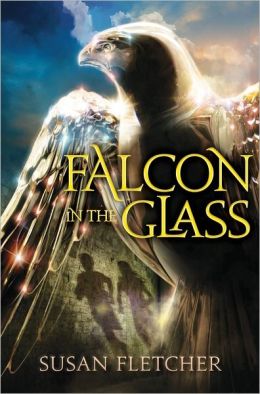
Book Review: "Falcon in the Glass" by Susan Fletcher


Fletcher adds to her repertoire of YA novels with this tale of a young would-be glass blower in Venice. The year is 1497, and Lorenzo is determined to overcome the dishonor of his assassinated father to become a glassblower in his own right. But nobody is willing help him learn. One night, in exchange for shelter, he buys the assistance of one of the Bird Children, social outcasts who have a strange connection with the birds that accompany them. This arrangement launches Lorenzo into a series of triumphs, revelations, and seemingly impossible situations to try and both save his family and the Bird Children who have come to rely on him.

The research that Fletcher did to accurately portray the life of a glassblower, down to the forbidden nature of leaving the small community, was really astounding and allowed her to create a very convincing depiction of the era. The settings are vivid and believable, as are the characters. Lorenzo is caught between wanting to follow his dream, needing to provide for his family, and protecting those who have come to rely on him, and his seeming helplessness in the face of the Council of Ten that governs Venice is well communicated.

While I very much liked Lorenzo's character (his growth over the course of the book is unmistakable, but not too sudden or without stimulus) I had a lot of questions about the Bird Children. Their special connection with their birds was never explained, although their back story was fleshed out a bit by the grandmother character. There was great potential for Letta to illuminate the nature of the Bird Children, but I felt let down by the fact that the only explanation from her was "we don't understand it either." I felt like a chance at some imaginative storytelling was overlooked here, and that detracted from the Bird Children as a group as well as individuals in context of the story.

Overall though, this book was a great read. It had compelling, believable conflicts, an interesting setting temporally as well as geographically, the characters were well written, and the arc was well balanced. I'd recommend this for either young teens or (even better) as a bedtime read-aloud. Trust me, you're never too old to share a book with someone you love.

Look for Falcon in the Glass, by Susan Fletcher, at your favorite independently-owned bookstore starting on July 9th.