Friday, December 26, 2014

Beautiful Lines in Literature


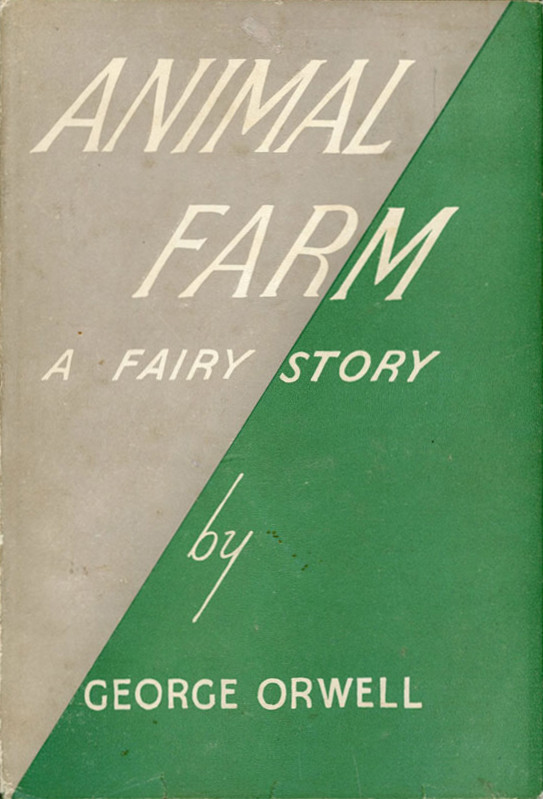
Every so often while reading, I come across a line that halts me in my literary tracks. Even if the writing style in a book as a whole isn't enough to really captivate me, sometimes a single line or phrase contains something special, something that makes me stop and savor it for a moment. Check out this list of some fantastic, poignant, pause-worthy lines from literature, and happy holidays!

Wednesday, December 17, 2014

Book Review: "Firefight" by Brandon Sanderson (The Reckoners Book Two)


I've been waiting a long time to get my hands on this book. Author Brandon Sanderson is a fairly well-known SpecFic author, having written the Mistborn books and finished Robert Jordan's The Wheel of Time series, among others. Right now his Stormlight Archive is experiencing immense popularity, with readers eagerly awaiting the third installment. But while we're waiting for that to appear, I entertained myself with the second book in his dystopian superhero series, Firefight.

When I read Steelheart last year, the first book in the Reckoners Series, I was drawn in by Sanderson's creative depiction of a world where humanity had been divided: most of the population remained the same but some were transformed into "Epics," people who were mysteriously gifted with superpowers by the sudden appearance of a brilliant red star called Calamity. But instead of becoming society's heroes, Epics became tyrants who ruled major cities and terrorized everyone living there. But with the rest of the country a wasteland, the risk posed by living under the thumb of an Epic was preferable to a life of scrounging. David Charleston, growing up in Newcago, watched Steelheart take over the city. For years he dreamed of taking down the Epic who killed his only family and destroyed his home. But he never had the chance to do anything about it until he found the Reckoners, a group of normal humans with the technology, determination, and sheer audacity to take on Epics and fight back for the rest of the population.

In Firefight, the second book in the series, some of the Reckoners' secrets have been revealed: Prof is an Epic, and Steelheart's minion Firefight has been lurking among them the whole time. But David isn't convinced that she's as evil as they thought. After all, if Prof can use his powers for good, why not other Epics? To find answers David and the Reckoners travel to Babylar, the mostly submerged city that used to be Manhattan. It's ruled by Regalia, an old associate of Prof's, and she may hold the answers to how Epics are created and influenced. But despite the many dangers of being in a new city, with a new Epic in charge and everyone looking for the Reckoners, David's main goal is to find Firefight and test his theory about Epic weaknesses. When his goals diverge from those of the rest of the team though, his friends become some of his most challenging adversaries.

The classic dystopian story of good versus evil gets spruced up by creative settings and unique characters in this continuation of the adventure started in Steelheart. Sanderson reimagines Manhattan as a tropical Venice, with dense jungles growing inside of half-drowned buildings and glowing fruit to feed the people who live there in tents and shacks on rooftops. There's a vibrant, carnival-type feel to it that throws David convincingly off his game when compared with the forbidding Newcago that he left behind. The place both intrigues and worries David as he sees people accepting their place under the power of an Epic and enjoying what life they can, knowing that they may be blown sky-high the next moment if Regalia's mood should change. This attitude contrasts nicely with the Reckoners' outlook, creating a shift in perspective for David that helps him to see the problem of Epics in a new light.

David continues to pursue Firefight, but the book isn't solely focused on that: bringing Regalia down and stopping her from destroying her own city occupy the Reckoners, and a new epic called Dawnslight brings up interesting questions for the team and the people of Babylar. Through the new twists, David retains his memorable problem with metaphors. It felt more forced this time than it did in the previous book though, with his comparisons coming more and more outlandish and the ridiculousness making them more annoying than amusing. Firefight's character remained wonderfully written though, Dawnslight is creative indeed, and the ways in which Prof changes set up the third book in the series to be potentially explosive.

I'm still confused by the naming system (or lack thereof) that Sanderson uses for Epics. Prof was a science teacher before Calamity, and Dawnslight represents hope as well as somehow producing glowing fruit; but Regaila's water-based powers have nothing to do with her name, and Firefight's powers have nothing to do with fire (although there are correlations). I think that some of the Epic names would sound a little less cheesy to me if they were more representative of the Epics themselves, instead of sounding like nicknames that they made up for themselves.

While the secret to Epics' weaknesses is less than imaginative, overall this follow-up to Steelheart delivered an excellent continuation of the story, blending new surroundings with the same story lines and characters that intrigued me in the first book. It's creative, and Sanderson has left us set up for a very intense third installment. Firefight by Brandon Sanderson will be released on January 6th, 2015, and is available for pre-order now through your favorite local, independent bookstore.

Tuesday, December 2, 2014

Book Review: "The Doubt Factory" by Paolo Bacigalupi


If the name Paolo Bacigalupi sounds familiar to you, it's probably because he's also written award winners The Windup Girl and Ship Breaker. His latest book, The Doubt Factory, continues his foray into the world of Young Adult writing with, in my opinion, mixed results.

Alix Banks leads a charmed life: she has a rich family, attends a prestigious prep school, achieves the perfect balance between school and partying, and the biggest worry she has is studying for the upcoming SATs. Girls in Alix's position, with corporate fathers and out-of-touch, stay-at-home mothers, don't worry about where they'll end up in life; their family connections keep them in the world of the wealthy where they marry other rich members of the 1% and start the cycle all over again with children of their own. Complacent, Alix questions none of this until one day when someone new arrives at her exclusive academy.

Moses is the leader of a group called 2.0. They might be terrorists, hackers, animal rights activists or just vengeful teens, depending on who you ask. But both the FBI and the corporations that Alix's father helps to defend and shield are determined to bring him down, and the only way he can see to expose Mr. Banks and his business dealings is through Alix. But can he turn her? Can he make her see that her life of luxury is because of faked medical trials, harmful products on grocery store shelves, and class action lawsuits that fail because of Mr. Banks and his damage control for corporations?

I had mixed feelings about this book from the start. The first red flag went up for me when the author seemed to romanticize stalking behavior. It's integral to the plot that Moses and 2.0 be able to infiltrate Alix's life and convince her to listen to their stories, and naturally, that means getting close to her to earn her trust. But when Alix sees her headmaster violently attacked, is warned by multiple authorities that she could be in danger, and still finds herself having fantasies about the tall, dark and handsome stranger who wants to kidnap her, I was admittedly upset. Stalking is potentially a very dangerous situation for everyone, not just teenage girls. Alix did eventually realize just how dangerous of a situation she put herself in, but an awfully roundabout route was taken to get her to that conclusion.

The story does point out valuable lessons about thinking critically about what goes on around you, looking closely at things not out of paranoia, but out of a desire to understand them. The social commentary against corporations and the control that they have over us as consumers was not subtle, but it was a great real-life opportunity to tell a story of suspense, espionage, and modern subterfuge. It brings to light the reality of corporate manipulation of consumers and the marketplace, and shows how being conscious of how these concerns are spun by different parties can open a person's eyes.

It's not the most artistically spun of tails, but The Doubt Factory by Paolo Bacigalupi makes an important point about the world around us and how being more aware of it can improve some things. It'd be a great read for critically thinking teens, or those interested in activism and social justice. You can find a copy of it now at your favorite local, independently owned bookstore.

Sunday, November 23, 2014

Historically Banned Books: An Overview


If you've read some other posts on this blog, you know how strongly I feel about banned books. I make no apologies or excuses for the fact that I believe a person should be able to read what they want to read, regardless of what others think of it. After all, somebody will be offended by just about anything that's out there, and along those same lines, there is a perfect book out there for everyone.

Shortlist.com has put together a partial list of historically banned books, in the form of some interesting charts and graphics. Take a look, and remember that not everyone has a choice in what they can or cannot read. In my opinion, we are very, very lucky to be able to make those choices for ourselves.

Tuesday, November 18, 2014

Book Review: "In The Shadows" by Kiersten White (author) and Jim Di Bartolo (artist)

In the Shadows

Hybrid formats of writing and art in books have always caught my interest. After all, words on a page can be used in some innovative ways: Jonathan Safran Foer, in one of my favorite examples, uses overlapping text, different spacing and outline formats,and even some black-and-white photos to enhance the story in "Extremely Loud and Incredibly Close" and to help deepen the story and express thoughts, feelings, and different representations of his characters and their surroundings. Graphic novels take this hybrid approach all the way, completely integrating text story with art so that the story is incomplete without one or the other.

In The Shadows by Kiersten White and Jim Di Bartolo combines sections of graphic art and others of text to tell the story of a small family in the Maine countryside, around 1900. Minnie and Cora help their mother to run a boardinghouse, their business since their father died years ago. They keep company with Arthur, a young man whose past is somehow connected with their family, and whose mysterious origins keep him alone despite Minnie's growing feelings for him. One summer everything changes for them, when brothers Thomas and Charles come to stay with them. Charles is dying of an illness that Thomas hates himself for being unable to stop, but they may have a chance for one last summer of fun together in the company of Minnie and Cora.

But the troubles plaguing Thomas, Charles, and their father turn out to be the same ones that killed Arthur's parents, the same ones that keep him separated from those around him and make him afraid of himself. If he lets himself delve into the secrets of his parents, will he succumb to obsession and paranoia as well? He doesn't have a choice in the end if he's going to save Minnie and Cora, using what knowledge he kept after his parents' death to uncover a sinister ring of powerful people in the shadows of the world stage. The Ladon Vitae, as the organization is called, use their immortal lives to control international politics, industry, history, culture and to play with the lives of those around them. To uncover their secret and stop them, to rid them of their unnatural abilities and undo the source of them, Arthur may have to sacrifice more than he hoped.

This novel is formatted in alternating chapters of stunning art (with no words at all) and text. It took me a very long time to realize this, but the art chapters begin where the text story ends, so that throughout the book you jump back and forth between time periods. This is an **awesome** idea, if the reader knows to look for it. The dates of the different images in the art chapters were the only clue into what was happening with the time periods, and those were not displayed very prominently. If you were really immersed in the story, like I was, it was very easy to miss the dates entirely. The result was that once I finally realized what was happening in the interplay between text and art, I had to go back through all the art portions again to really understand what was happening and appreciate the idea as a whole.

The interpersonal relationships between Minnie, Cora, Arthur, Thomas and Charles were well-developed and definitely drove the story, but I do wish that more time and energy had been spent expanding on the idea of the Ladon Vitae and their origins, motivations, etc. The conspiracy portion of the story line was anemic at best, even though it was the whole reason for this life-changing undertaking for the characters. The reader was never really presented with much about them, other than that they were evil and in control. It was a missed opportunity from my point of view, one that could have made Arthur's actions much more significant.

If you like character-driven stories that involve some suspense and conspiracy, a dash of magic, danger and some pretty innovative formatting with art and text, pick up a copy of In The Shadows by Kiersten White and Jim Di Bartolo. The story background isn't terribly deep, but it is creative,with a happily ever after in the end. You can find your copy at a local, independent bookstore near you.

Sunday, November 9, 2014

Writing Advice from Stephen King

stephen king

Few contemporary fiction writers can claim the kind of success that Stephen King has seen over the course of his career. So when he offers writing advice, it strikes me as worth listening to. In this interview with Business Insider, King offers his opinions and expertise on everything from writing approach to content and self-perception. It's an enlightening read for anyone from the dabbling writer to the established author who's looking to give their stories an extra edge.

Friday, November 7, 2014

Book Review: "Death, Dickinson, and the Demented Life of Frenchie Garcia" by Jenny Torres Sanchez


October was Mental Health Awareness month. While I very much hope that everyone reading this heard about it at some point during the month, I mention it again now because depression, anxiety, and a whole slew of other disorders impact so many people every day, myself included. Whether or not you're aware of it, you know someone who struggles with mental illness either in themselves or someone close to them.

It seems as though the transitional period that is teenhood is when many of these mental health challenges can make themselves known. Small things can pile up to crate a seemingly insurmountable of adversity, or one big catastrophe can explode your life into so many fragments that you feel like you'll never be able to pick them all up. And when you're in the middle of trying to define who you really are for the first time in your life, as is the case for a lot of teens, it's sometimes very easy to get to the point of being overwhelmed.

Frenchie Garcia is at her breaking point. Or, rather, her melting point. She's 17 and still living with her parents in Orlando, her application to art school in Chicago was rejected, and her best friend has all but disappeared thanks to his girlfriend. It's enough to make anyone a little bit depressed. All her plans for her next steps in life have fallen through, and the only things Frenchie has the energy to do are walk to the neighborhood graveyard for chats with the headstone of someone named Emily Dickinson (not the famous poet, just someone who happened to share her name) and lie in bed thinking about the night that Andy Cooper died. Depressed, frustrated and full of guilt, it's not long before Frenchie is alienating the only friends she has left and showing the worst side of herself to the only person who might be interested in helping her work through her problems.

Desperate to come to terms with what happened the night Andy Cooper died, and hopefully through that start getting her life back together, Frenchie launches a half-baked plan to recreate his last night alive and try to find some meaning in it, some reason for the way it took place. If she can find a good explanation for why he died, maybe she can show herself that it really wasn't her fault, and escape the depression that's eating her life from the inside out.

"Death, Dickinson, and the Demented Life of Frenchie Garcia" by Jenny Torres Sanchez is the story of a teenager's desperate attempt to find closure before she completely self-destructs and ruins her own chances of rebuilding her life. The way that Frenchie starts losing control and perspective, lashing out at the people around her and creating more problems for herself in the process, felt very realistic to me. Partially this was because Frenchie herself expressed a kind of incredulity that so many things could go wrong in such quick succession. As the reader I could clearly see that Frenchie's own irrational actions, caused by her depression and inner turmoil, were what was causing her problems with the people around her. But since the book was written from her perspective, I was able to understand Frenchie's frustration and the sense of powerlessness that went with her situation.

While her parents and her friends Joel and Robyn play important roles in Frenchie's life and struggle, namely by being wronged by and then forgiving Frenchie, they remain very static characters without much background or development. This ensures that the reader focuses on Frenchie and her progress, but ti also results in a certain lack of the depth that similar stories like John Green's "Looking for Alaska" or Ava Dellaira's "Love Letters to the Dead" possess. I think I would have appreciated the significance of Frenchie's relationships and how she first damages and then repairs them if there had been more time spent actually letting me get to know the people who are important to the protagonist.

Essentially this entire book centers on Frenchie, her thoughts and emotions, almost to the exclusion of every other character. While I felt that this was a sort of missed opportunity to deepen the story as a whole, I also understand that it makes sense from a certain perspective. I'll be the first to admit that when I was a teenager, my entire life revolved around me and my emotions. Looking outside of them was a difficult task, and it's also the big challenge that Frenchie has to overcome in order to set her life straight and move forward. For other teens who are struggling to see their way through the same issue, Frenchie's "selfish" perspective might be the most sympathetic.

One detail that really bothered me, despite the fact that it's very small: at one point, Frenchie is allowed to get a tattoo, at a parlor, without having her ID. She does it on a whim, without her parents' permission, and it's all thanks to the fact that one of the artists there recognizes her from the night that Andy Cooper died and vouches for her. In reality, a tattoo artist could lose their livelihood over that. I understand that for the sake of the story, he was supposed to represent a supporting character on Frenchie's journey to acceptance. But there were other ways that this could have been done without the blatant misrepresentation of the tattooing community and the impression that's given of tattooing and body modification in general being "not a big deal" even if you're a minor.

If you're looking for a sweet, sad story with a hopeful ending about picking yourself up and moving on, and the crazy things you sometimes have to do in order to achieve that, pick up a copy of "Death, Dickinson, and the Demented Life of Frenchie Garcia" by Jenny Torres Sanchez. It came out last fall and is available right now at your favorite local, independent bookstore.