Thursday, February 19, 2015

Good Books I'll Never Read


It's strange to realize that I'll never have time to read everything I want before I die. No matter how many hours a day I spend poring over pages, there will always be books left unread, stories left unfinished. To me, that means that what I choose to spend my time reading is all the more important, since I'm picking it to the exclusion of something else. If I pick up something that looks interesting and it hasn't hooked me twenty pages or so in, I put it down unless it comes with a strong recommendation from a fellow reader who knows my tastes.

This "love it or leave it" approach isn't restricted to new books that are coming out; it also extends to the classics and popular contemporary titles. Susie Rodarme, a writer for BookRiot, has compiled her own list of books she'll never read and explained why that is for each one of them. I'll admit, I've read a good number of the ones she's chosen to ditch. But here are some of my picks for what I know I'll never read:

> "Gone Girl" by Gillian Flynn
> "The Road" by Cormack McCarthy
> "Crime and Punishment" by Fyodor Dostoyevsky
> "The Goldfinch" by Donna Tartt
> "Norwegian Wood" by Haruki Murakami

Monday, February 16, 2015

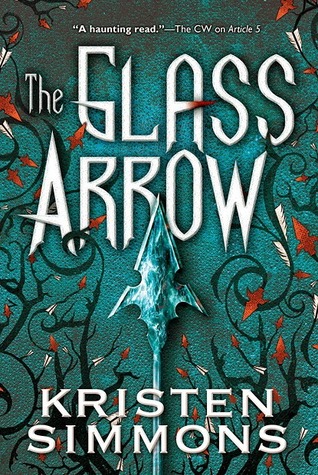
Book Review: "The Glass Arrow" by Kristen Simmons


When I'm reading books that feature strong female characters, I have two real pet peeves that seem to surface more often than they should: when romance completely hijacks an otherwise interesting story, and when one seemingly isolated event ends up toppling an entire paradigm. Because honestly, are you really that worried about who's going to take you to prom when the world's about to implode? And while one person can become the face of a revolution (I'm looking at you, Katniss Everdeen), one woman escaping from a prison or work camp doesn't immediately reduce the patriarchy to a smoldering heap.

Kristen Simmons, who is also the author of the Article 5 series, managed to avoid both of those pitfalls in her latest book, The Glass Arrow. It's a cross between The Handmaid's Tale and The Maze Runner, as unlikely as that sounds, with main character Aya at the epicenter. She's been raised by her mother, along with two young orphans named Tam and Nina, in the wilds far away from the city of Glasscaster. Inside the city walls men rule all, and women are nothing more than commodities to be bought and sold for breeding. When Aya is captured and brought to Glasscaster to be sold, she enters this hopeful world of enslavement as a valuable commodity, since her upbringing in the wilds makes her naturally more fertile than city-bred women. But she won't make it easy for her captors to sell her, using every opportunity to attempt escapes and pick fights with the other girls around her. Perhaps, if she can make herself more trouble than she's worth, Aya can find her way back out to her family.

But eventually Aya can no longer escape being sold. Before she's locked away permanently in a glamorous prison to await her life as breeding stock, she has one last desperate chance to escape Glasscaster and find what's become of her family. In order to do so, she'll have to rely on the only friends she's made in the city: a mute horsemaster, a catty girl named Daphne, and an orphaned wolf pup. It's a strange assemblage of protagonists that make up our group of heroes in this dystopian young adult novel.

Simmons is an unapologetic feminist writer, which is reflected not only in the story as a whole but in details like how Aya rebels against things like being shaved and plucked just to conform to the standards of beauty held in the city. While this is a great "you're okay the way you are, be strong in yourself" message to send teenagers of any gender, I felt like it was really overdone in this particular book. Aya's entire existence narrows into the sentiment of rebellion in pursuit of her escape, even leading her to do ridiculous, clearly hopeless things like attack her armed and biologically enhanced guard with her bare hands, or tear her own clothing before being presented to potential buyers.

While the absolute nature of the society Simmons created was an interesting setting in which the story could unfold, with women having no power and Aya being able to subvert that, it also provided the unfortunate opportunity for every little encounter to be a life-or-death situation. I felt like I got adrenaline fatigue about half way through the book from all Aya's harrowing attempts at various things, so that when the real climax arrived I wasn't as primed for it as I felt I should have been.

One thing that I did really appreciate about this otherwise too-over-the-top novel though was the fact that Aya's goal wasn't to topple society and its errant ways or end the subordination of women everywhere; she just wanted to get home. She wanted to get herself out and away. That's it. And her story's outcome had no obvious ramifications toward that end, either; it was purely her tale. There is no planned sequel for The Glass Arrow either, so if you'd like to see Glasscaster fall, you can write your own preferred continuation after you finish the book.

The Glass Arrow by Kristen Simmons was released on the 10th of this month and can be purchased now at your favorite local, independent bookstore.

Tuesday, February 10, 2015

Loving Books Too Much


Let's face it: sometimes you love books more than people. I do too.

Just in time for Valentine's Day, here's a list of 17 times when your love of books may have gotten a little extreme. Enjoy! And remember, a book lover never really goes to bed alone.

Monday, January 26, 2015

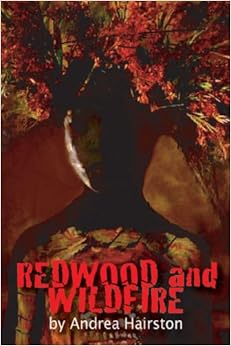
Book Review: "Redwood and Wildfire" by Andrea Hairston


I usually don't like trying to define a story in just a few words. In most cases I feel like it detracts or minimizes the subtleties and subplots of a novel, oversimplifying the intricacy of the writing. But in the case of "Redwood and Wildfire" by Andrea Hairston, I found that I need to reduce the book down to a few words just to start organizing my thoughts. And what those came to were family, love, self, and magic.

Redwood Phipps is a hoodoo woman like her mother Garnet, who was lynched one night in order to save her family and the rest of colored Peach Grove from night riders. Georgia in 1898 isn't an easy place to be any kind of person of color, whether they're black, native American, or any combination thereof. Still Redwood and her older brother George, their younger sister Iris, and their extended family soldier on. George has an angry spirit, always fighting against his situation in life, and Iris shows signs of one day growing into a powerful hoodoo woman. But Redwood's real friend and confidant is Aidan Cooper, "Crazy Coop," the drunk Irish-Seminole farmer whose penchant for moonshine is in constant danger of ruining his farm and possibly killing him as well. Aside from Redwood's company Aidan's only solace lies in the music he plays on his banjo, an instrument with which Redwood insists he has his own kind of magic.

Healing one another while the ghost of Redwood's mother looms large over them both, something more might have arisen between Redwood and Aidan. But violent tragedy strikes before either one of them can sort out their feelings. Redwood is forced to flee Peach Grove, heading north toward Chicago where her brother George set off for years ago. Aidan is left behind to cover her trail and try to take care of Redwood's aunt, uncle, many cousins, and sister Iris. But the ghost of Garnet Phipps still tugs on them both, pulling them back together by their heartstrings across time and distance. When there's nothing left for them in Peach Grove save memories and scars, Aidan and Iris make their way north to Chicago, hoping to somehow find Redwood and reunite with her.

But the life that Aidan and Redwood once imagined with one another is no longer a possibility; time has changed them both, molded them into new people in a new world far from the swamps of Georgia. Marked by tragedy, Redwood no longer trusts her hoodoo heritage or the power that she wields with it. Aidan struggles to embrace the Seminole heritage of which he was always taught to be ashamed, while reconciling that identity with the "Red Man" image that most of the country has of that culture. Their inner struggles will determine not only who they are in the end, but whether or not those people are still capable of loving each other in any way but at a distance.

Andrea Hairston has a rare talent for writing both plays and novels, and her affinity for both formats really shines through in the way she's able to make the reader truly see the story in "Redwood and Wildfire." Her visceral descriptions of everything from the bright, hot swamps of Georgia to the smell of Chicago at the turn of the century make the story come alive. I didn't just hear the characters speak; I watched their lips move. But concrete images and sensations weren't the only things that Hairston's writing really brought off the page; the raw emotions experienced especially by Redwood and Aidan are meticulously brought forth in all their beautiful agony. How do you love and accept yourself when the rest of the world sees that part of you as just another stereotype? How do you reclaim your confidence when there's no way to fill the hole that something left in your heart? Sometimes the world keeps going forward, dragging you along with it, even when you're lost and stumbling. And the only way to regain your footing is to try and catch up with it.

Hairston doesn't just use her affinity for screen writing to shape a touching novel; she includes her love of film and script in the story itself. Her depictions of the early years of the film industry, who was involved in it and in what context, and how entertainment for different ethnic groups changed as a result of film. It's a mini history, culture, and film studies lesson in the middle of a great novel. There was a short time between Redwood's arrival in Chicago and her undertaking to make a film that felt a little bit directionless to me, but then again that sentiment mirrors Redwood's lack of direction and Aidan's sense of being lost. Other than that brief portion, I was hooked on this story from beginning to end.

If you're interested in historical novels that deal with cultural identity, hoodoo, and the journey to rediscover one's self after the unthinkable happens, this is a novel that you can't afford to miss. It's a story about race, yes, but it's more about what that means for family and for self-perception, for either accepting who you are and become or choosing to embrace something else. Its wonderfully rich characters and ever-changing scenery will keep you intrigued, and even after the last page you'll be sighing and smiling in hope for what the future will hold for Redwood and Aidan. "Redwood and Wildfire" by Andrea Hairston is available now from your local independent bookstore.
Friday, January 23, 2015

Dedications


Most of the book dedications I come across are of a personal nature. Authors thank their friends, families, their children, their inspirations for helping them to achieve the completion of their work. Some authors, on the other hand, use their book dedications to fully embrace their full vitriolic potential. Mental Floss has put together a list of not-so-gracious book dedications, designed to shock and sometimes ridicule. One of my personal favorites though did not make the list. It's from "House of Leaves" by Mark Z. Danielewski: "This is not for you."

Tuesday, January 13, 2015

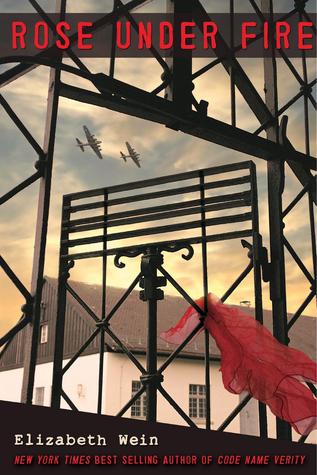
Book Review: "Rose Under Fire" by Elizabeth Wein


Elizabeth Wein became a household name around the bookstore where I work in 2012 when her first book, Code Name Verity, hit shelves. Our staff loved it, and it went on to win a Printz award. So with the author's accolades piling up I sat down to read her second book, Rose Under Fire.
While Rose's story is not at all related to the characters or events that take place in Code Name Verity, it's the second of what's being called the "Young Pilots Series." Rose is a pilot for the Air Transport Auxiliary during WWII, a teenage girl from Pennsylvania who loves the excitement of transporting planes in Europe but is eager for the war to end. One afternoon while flying back from a mission, she is captured by German pilots and taken to Ravensbrück, the infamous women's concentration camp in Germany. There, in order to survive she forms incredible bonds with women from all over Europe to survive under unthinkable circumstances, and eventually to escape as the war draws to a close. It's a harrowing tale of desperation and the evil but also the resilience of the human spirit. 

The book is written in the form of a journal that begins well before Rose is near any danger. She describes her life as an ATA pilot and the people she knows, from her wealthy family to her friends and the soldier she dates when he's not abroad. Then she disappears suddenly on her way back to camp from her last mission, accidentally leaving her journal behind her. It's returned to a friend of hers, along with the rest of her personal effects, under the assumption that Rose is dead. The friend writes a few entries, which is what tells the reader that Rose is missing but that all hope is not lost. The war ends, soldiers come home, and tales of the horrors at places like Auschwitz and Dachau begin to surface. Finally we hear once again from Rose. From a hotel room in Paris she tells us, haltingly, the story of what happened to her after her capture. 

Characters were mainly what drove this book, pushed together and pulled apart by the ebb and flow of war as it drew to a close and the Nazis began to succumb to desperation. Wein's vivid descriptions of the Polish women who underwent medical experimentation, of the wild Russian fighter pilot, of serene French matrons and the German criminals who were put in charge of other prisoners paint a brilliant tapestry of humanity, then white-wash it all with the hopeless colorlessness of war. 

While interesting and emotional, I didn't feel that Rose Under Fire was nearly as cohesive a story as Code Name Verity was. It felt as though bits and pieces had just been stuck onto the beginning and the end of the main story (Roses's survival at Ravensbrück) in order to include more volume. While it's true that the "before" and "after" portions helped to provide perspective on Rose's ordeal, and the "after" portion provided some important closure, they made the story's main focus unclear as it shifted. Personally, I think that the story would have been more effective if the beginning up until Rose's last mission were omitted entirely. Removing the multiple instances of meandering that were nonessential to the story and to Rose's post-war relationships would have streamlined the story after her return from Ravensbrück as well. 

My overall feeling about Rose Under Fire is that while it certainly has its merits, the story went in too many directions and tried to include too many interesting asides to be completely effective. The third installment of the Young Pilots Series, entitled Black Dove, White Raven will be released in March. Both Code Name Verity and Rose Under Fire are available now through your favorite local independent bookstore. 

Friday, December 26, 2014

Beautiful Lines in Literature


Every so often while reading, I come across a line that halts me in my literary tracks. Even if the writing style in a book as a whole isn't enough to really captivate me, sometimes a single line or phrase contains something special, something that makes me stop and savor it for a moment. Check out this list of some fantastic, poignant, pause-worthy lines from literature, and happy holidays!