Monday, March 30, 2015

Book Review: "When We Were Animals" by Joshua Gaylord


Not all love stories are created equal. You can keep your Disney princesses and your happily ever afters, and I sincerely hope that you enjoy them. But they're just not what I want to read about sometimes. They're not author Joshua Gaylord's thing either, as evidenced by his new novel "When We Were Animals." This is not a soft, warm romance; this is a love story about corners and edges and the way your tongue feels when it scrapes across your teeth. I'm not talking about a Christian Gray-type romanticized story of abuse, either. This book is a poetic yet raw look at the brutality of human emotion, particularly of affection, underneath the pretty facades of suburban paradise.

Lumen, the main character and narrator, grew up in a small town with a unique secret: when local youth reach puberty, on the full moon of each month for approximately a year they "go breach." When teens breach they essentially succumb entirely to animal instinct, running wild around town naked and destroying anything they please, fighting, having sex and generally wreaking havoc. Everyone not in the throes of the breach, young and old, remains indoors and tries to ignore the screams and howls from outside, ignores the scratches and bruises on the neighborhood teens the next morning.

When the moon is not full, and during the days, breachers act normally. But going breach is seen within the community as a mark of maturity, and Lumen just doesn't seem to be able to convince her body to take that leap (which I found interesting as a reader, considering the calm, lucid prose with which she expresses herself, and how her behavior as a "good girl" seems much more mature than the breach-drunk antics of her peers). Lumen's lack of breach isn't entirely surprising though, since her mother never breached either. It was unheard-of for someone born and raised in town to avoid the breaching process. But Lumen finds herself in a sort of half-breach, joining her classmates outside on breach nights but retaining her reason and her sense of self. The result is that her narrative becomes half coming-of-age story, told from the perspective of a middle-aged suburban housewife, and half anthropological study of the culture of breaching in the town, as well as how relationships morph within the pack of breachers.

Lumen's unique situation, the in-between space that she occupies, does not go unnoticed by the breachers. Two boys in particular, Peter and Roy, take an interest in her for very specific and different reasons. Peter is a golden boy, every girl's dream, and sees her other-ness as something pure in need of cherishing and protection. She is above the rest of them, he tells her. Roy, on the other hand, perceives her as a physical manifestation of the breach itself, her outward calm and fascination with the breachers just a thin veneer over all the pure ferocity and brutality that defines the condition. And depending on whose company she's in, Lumen takes on to a certain extent the characteristics that each of the boys project onto her. This steers her life in different directions throughout the story but the reader sees Lumen eventually becoming more curious about the shadowed side of her, her ability to explore it without succumbing to it. She also wonders what's wrong with her, why she can never belong to one group or another. While this question is explored frequently and vehemently by her character, it is never answered. That is, in my opinion, the best possible way to handle the situation and author Gaylord did it perfectly.

All through the book, Lumen sees herself as her namesake: a space, an in-between state that both exists and does not, full of nothing but emptiness. She is defined by absence - the absence of her mother, of puberty, of any sense of self aside from what others project onto her. Her father's ideal of her as a "good girl," the influence of her classmates, and later on in life, what her husband expects of her are all things that she adopts like a hermit crab decorating its shell. Her sense of self, and the different definitions of a lumen, are something that Lumen explores throughout the book. The different meanings of a lumen lend significance to the different stages of her personality, of her evolution as an individual.

Lumen narrates the story as a grown woman, married to a nice normal man, a stay-at-home mother living in suburban bliss. She includes anecdotes from her present life not only to contrast it with her upbringing before and during the breach years, but also to illustrate the ways in which she is still unconsciously defined by it. Her seeming lack of empathy , of appreciation for social norms is perceived by those around her (including her husband) as a possible mental illness. But the reader, having heard her story in her own words, appreciates the elegance of Lumen's detached attitude, of her inability to comprehend why the roughened edges of life are things that people want to avoid, to obliterate. She doesn't love her husband or her son any less than the other wives around her; she just has a different perception of what love really is.

"When We Were Animals" by Joshua Gaylord is not a novel to be missed. Whether you're looking for a gripping protagonist, a strange and compelling tale, a bold depiction of humanity in all its animalistic glory, or a story that borders on magical realism in its lyrical prose, this book has it all. Plan on picking up a copy at your favorite local independent bookstore on April 21st. Mark your calendar, especially if like me, you enjoy an author with a singular gift for expressing spaces that are only defined by what goes on around them.

Monday, March 16, 2015

Teenage Reading Habits

A student buries herself in a book in the Shaw Library at the British Library of Political and Economic Science in 1964.

At a time in the book industry when the largest gains are happening in Young Adult and New Adult genres, it may be surprising to hear that teens aren't reading as much as they used to. Back in May, NPR ran a story on why that is. It cites a study done by the nonprofit organization Common Sense Media, and you can listen to it here. What could this means for the future of the reading community?

Wednesday, March 11, 2015

Book Review: "The Second Guard" by J.D. Vaughn


When an author writes a book with a specific moral or social agenda in mind, it can be difficult to work it into the story without sounding "preachy" or bashing the reader over the head with the message. The Second Guard, the first installment of a new series by J.D. Vaughn (actually a pen name for two writing partners), is a brilliant example of how when someone writes an exciting, engaging story that draws you into the world the author has created, the right messages flow through the words on their own.

Probably the simplest way to sum up this beautifully written book is to call it a retelling of "Mulan" set in pre-Columbian South America. But that's an oversimplified method at best of describing a story that contains adventure, family, battles, journeys, mystery, friendship and intrigue in masterfully balanced proportions. But instead of  woman warrior hiding who she really is, main character Tali is in her element training to become part of Tequende's elite Second Guard. It's through her that we're introduced to the kingdom's rich, unique history and culture.

"J.D. Vaughn" has created a detailed and idealistic but fascinating environment in which this story unfolds. It's a matriarchal society, peaceful in nature but defended by an elite fighting force as well as advantageous geographic location. In order to ensure a ready fighting force and a constant labor source as well, the second child of each family is sent to serve the crown as either a soldier or a servant for a period of several years. This practice is considered an honor to both families and children, especially in a world ravaged by war where Tequende is the only real bastion of peace and prosperity. This has turned it into a melting pot, full of peace-seeking refugees who have made it their home and adopted the culture there to start a new life.

Tali, recently inducted into training for the Second Guard after her 15th birthday, finds herself in the middle of a plot that could overthrow Tequende's queen and deliver the kingdom into the hands of warring neighbor kingdoms. But as only a soldier-in-training, she's powerless and in her investigation she must be wary not only of her restrictions as a newcomer but also regarding which of her military superiors may be in on the plot. She transcends the social divisions that exist between Tequende's guilds (Sun, Moon, and Earth) through a sincere love of her family and her kingdom. This theme of reciprocated trust between the rulers and the people, idealistic as it is, makes for a wonderful story setting and a great setup for the villains' motivation.

Tali is made to be a soldier. There's no doubt in anyone's mind of this, be they character or reader. But her self-confidence makes her unapproachable at times to others, a realization that she makes early on in the book. She evolves as she learns more about the mindset with which she was raised, that of a future soldier, and her new sense of self-awareness in relation to those around her, what unites them and what makes them different from one another, leads her to better appreciate the unique gifts that they each possess. It's a rewarding transformation to watch even from outside the events themselves, and was artfully written so that no single transformative moment turned her into a completely different person. Tali remains herself, with her own quirks and flaws; but she actively seeks to improve herself, sometimes regarding flaws of which she's aware and sometimes concerning things of which she was previously unaware. The inclusion of a smart, capable, extremely able deaf character was also an inspired way to include diversity as an everyday occurrence in the story.

Cultural tidbits at the beginnings of chapters, excerpts from a fictional historical text, add a lot to the book. They reveal the Tequendian values that motivate Tali and her friends as well as fleshing out the story world and making it more "real" for the reader. They also help to underscore the stereotypes and inequalities that still persist even in this seemingly idyllic society, the challenges that Tali overcomes in her struggle to prevent catastrophe. There's a heavy native South American influence at work throughout the book, from the types of agriculture described to the landscape and the names in the book. Even the book design and layout reflect the influence of pre-Columbian native peoples of places like Chile. The rich cultures of South America and their history seems oft overlooked when authors go hunting for world building resources, and I'm so incredibly pleased that this book's author(s) found inspiration in it and built a wonderful story around and out of it.

I was slightly frustrated by the way Tali, in the heat of the moment, goes off half-cocked in making accusations concerning royal intrigue. However, it wasn't a big stumbling block when I reminded myself that her character, while mature, is still only 15 years old. That, and reminding myself that I'm more accustomed to reading more intense, supremely complicated plots from authors like Jacqueline Carey or Patrick Rothfuss. This book isn't as complicated as theirs, but it has some twists, and it makes sense. Which is really the most important part when it comes down to it, in my opinion.

Overall, The Second Guard by J.D. Vaughn is a fantastic read and I am very much looking forward to the next installment as Tali and her friends make their way up in the world through mutual support and friendship. It will be released on April 14th and you can pre-order it now through your favorite local, independent bookstore.

Thursday, February 19, 2015

Good Books I'll Never Read


It's strange to realize that I'll never have time to read everything I want before I die. No matter how many hours a day I spend poring over pages, there will always be books left unread, stories left unfinished. To me, that means that what I choose to spend my time reading is all the more important, since I'm picking it to the exclusion of something else. If I pick up something that looks interesting and it hasn't hooked me twenty pages or so in, I put it down unless it comes with a strong recommendation from a fellow reader who knows my tastes.

This "love it or leave it" approach isn't restricted to new books that are coming out; it also extends to the classics and popular contemporary titles. Susie Rodarme, a writer for BookRiot, has compiled her own list of books she'll never read and explained why that is for each one of them. I'll admit, I've read a good number of the ones she's chosen to ditch. But here are some of my picks for what I know I'll never read:

> "Gone Girl" by Gillian Flynn
> "The Road" by Cormack McCarthy
> "Crime and Punishment" by Fyodor Dostoyevsky
> "The Goldfinch" by Donna Tartt
> "Norwegian Wood" by Haruki Murakami

Monday, February 16, 2015

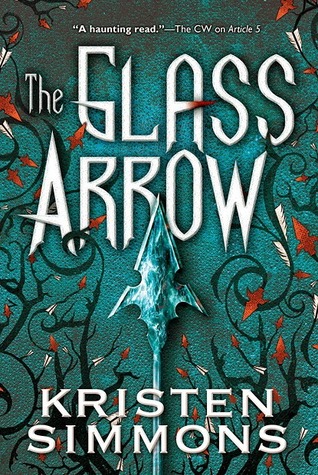
Book Review: "The Glass Arrow" by Kristen Simmons


When I'm reading books that feature strong female characters, I have two real pet peeves that seem to surface more often than they should: when romance completely hijacks an otherwise interesting story, and when one seemingly isolated event ends up toppling an entire paradigm. Because honestly, are you really that worried about who's going to take you to prom when the world's about to implode? And while one person can become the face of a revolution (I'm looking at you, Katniss Everdeen), one woman escaping from a prison or work camp doesn't immediately reduce the patriarchy to a smoldering heap.

Kristen Simmons, who is also the author of the Article 5 series, managed to avoid both of those pitfalls in her latest book, The Glass Arrow. It's a cross between The Handmaid's Tale and The Maze Runner, as unlikely as that sounds, with main character Aya at the epicenter. She's been raised by her mother, along with two young orphans named Tam and Nina, in the wilds far away from the city of Glasscaster. Inside the city walls men rule all, and women are nothing more than commodities to be bought and sold for breeding. When Aya is captured and brought to Glasscaster to be sold, she enters this hopeful world of enslavement as a valuable commodity, since her upbringing in the wilds makes her naturally more fertile than city-bred women. But she won't make it easy for her captors to sell her, using every opportunity to attempt escapes and pick fights with the other girls around her. Perhaps, if she can make herself more trouble than she's worth, Aya can find her way back out to her family.

But eventually Aya can no longer escape being sold. Before she's locked away permanently in a glamorous prison to await her life as breeding stock, she has one last desperate chance to escape Glasscaster and find what's become of her family. In order to do so, she'll have to rely on the only friends she's made in the city: a mute horsemaster, a catty girl named Daphne, and an orphaned wolf pup. It's a strange assemblage of protagonists that make up our group of heroes in this dystopian young adult novel.

Simmons is an unapologetic feminist writer, which is reflected not only in the story as a whole but in details like how Aya rebels against things like being shaved and plucked just to conform to the standards of beauty held in the city. While this is a great "you're okay the way you are, be strong in yourself" message to send teenagers of any gender, I felt like it was really overdone in this particular book. Aya's entire existence narrows into the sentiment of rebellion in pursuit of her escape, even leading her to do ridiculous, clearly hopeless things like attack her armed and biologically enhanced guard with her bare hands, or tear her own clothing before being presented to potential buyers.

While the absolute nature of the society Simmons created was an interesting setting in which the story could unfold, with women having no power and Aya being able to subvert that, it also provided the unfortunate opportunity for every little encounter to be a life-or-death situation. I felt like I got adrenaline fatigue about half way through the book from all Aya's harrowing attempts at various things, so that when the real climax arrived I wasn't as primed for it as I felt I should have been.

One thing that I did really appreciate about this otherwise too-over-the-top novel though was the fact that Aya's goal wasn't to topple society and its errant ways or end the subordination of women everywhere; she just wanted to get home. She wanted to get herself out and away. That's it. And her story's outcome had no obvious ramifications toward that end, either; it was purely her tale. There is no planned sequel for The Glass Arrow either, so if you'd like to see Glasscaster fall, you can write your own preferred continuation after you finish the book.

The Glass Arrow by Kristen Simmons was released on the 10th of this month and can be purchased now at your favorite local, independent bookstore.

Tuesday, February 10, 2015

Loving Books Too Much


Let's face it: sometimes you love books more than people. I do too.

Just in time for Valentine's Day, here's a list of 17 times when your love of books may have gotten a little extreme. Enjoy! And remember, a book lover never really goes to bed alone.

Monday, January 26, 2015

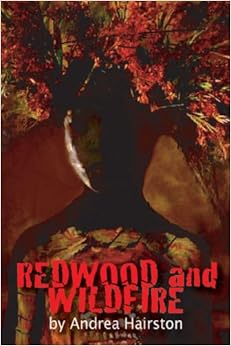
Book Review: "Redwood and Wildfire" by Andrea Hairston


I usually don't like trying to define a story in just a few words. In most cases I feel like it detracts or minimizes the subtleties and subplots of a novel, oversimplifying the intricacy of the writing. But in the case of "Redwood and Wildfire" by Andrea Hairston, I found that I need to reduce the book down to a few words just to start organizing my thoughts. And what those came to were family, love, self, and magic.

Redwood Phipps is a hoodoo woman like her mother Garnet, who was lynched one night in order to save her family and the rest of colored Peach Grove from night riders. Georgia in 1898 isn't an easy place to be any kind of person of color, whether they're black, native American, or any combination thereof. Still Redwood and her older brother George, their younger sister Iris, and their extended family soldier on. George has an angry spirit, always fighting against his situation in life, and Iris shows signs of one day growing into a powerful hoodoo woman. But Redwood's real friend and confidant is Aidan Cooper, "Crazy Coop," the drunk Irish-Seminole farmer whose penchant for moonshine is in constant danger of ruining his farm and possibly killing him as well. Aside from Redwood's company Aidan's only solace lies in the music he plays on his banjo, an instrument with which Redwood insists he has his own kind of magic.

Healing one another while the ghost of Redwood's mother looms large over them both, something more might have arisen between Redwood and Aidan. But violent tragedy strikes before either one of them can sort out their feelings. Redwood is forced to flee Peach Grove, heading north toward Chicago where her brother George set off for years ago. Aidan is left behind to cover her trail and try to take care of Redwood's aunt, uncle, many cousins, and sister Iris. But the ghost of Garnet Phipps still tugs on them both, pulling them back together by their heartstrings across time and distance. When there's nothing left for them in Peach Grove save memories and scars, Aidan and Iris make their way north to Chicago, hoping to somehow find Redwood and reunite with her.

But the life that Aidan and Redwood once imagined with one another is no longer a possibility; time has changed them both, molded them into new people in a new world far from the swamps of Georgia. Marked by tragedy, Redwood no longer trusts her hoodoo heritage or the power that she wields with it. Aidan struggles to embrace the Seminole heritage of which he was always taught to be ashamed, while reconciling that identity with the "Red Man" image that most of the country has of that culture. Their inner struggles will determine not only who they are in the end, but whether or not those people are still capable of loving each other in any way but at a distance.

Andrea Hairston has a rare talent for writing both plays and novels, and her affinity for both formats really shines through in the way she's able to make the reader truly see the story in "Redwood and Wildfire." Her visceral descriptions of everything from the bright, hot swamps of Georgia to the smell of Chicago at the turn of the century make the story come alive. I didn't just hear the characters speak; I watched their lips move. But concrete images and sensations weren't the only things that Hairston's writing really brought off the page; the raw emotions experienced especially by Redwood and Aidan are meticulously brought forth in all their beautiful agony. How do you love and accept yourself when the rest of the world sees that part of you as just another stereotype? How do you reclaim your confidence when there's no way to fill the hole that something left in your heart? Sometimes the world keeps going forward, dragging you along with it, even when you're lost and stumbling. And the only way to regain your footing is to try and catch up with it.

Hairston doesn't just use her affinity for screen writing to shape a touching novel; she includes her love of film and script in the story itself. Her depictions of the early years of the film industry, who was involved in it and in what context, and how entertainment for different ethnic groups changed as a result of film. It's a mini history, culture, and film studies lesson in the middle of a great novel. There was a short time between Redwood's arrival in Chicago and her undertaking to make a film that felt a little bit directionless to me, but then again that sentiment mirrors Redwood's lack of direction and Aidan's sense of being lost. Other than that brief portion, I was hooked on this story from beginning to end.

If you're interested in historical novels that deal with cultural identity, hoodoo, and the journey to rediscover one's self after the unthinkable happens, this is a novel that you can't afford to miss. It's a story about race, yes, but it's more about what that means for family and for self-perception, for either accepting who you are and become or choosing to embrace something else. Its wonderfully rich characters and ever-changing scenery will keep you intrigued, and even after the last page you'll be sighing and smiling in hope for what the future will hold for Redwood and Aidan. "Redwood and Wildfire" by Andrea Hairston is available now from your local independent bookstore.